Reselling Made Easy: How to Source for Profit
By David Torsak
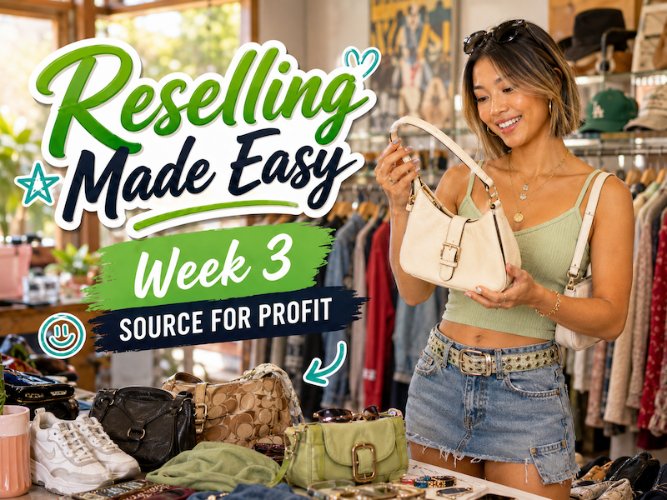
It is the treasure hunt. The thrift store rack. The yard sale table. The estate sale shelf. The random bin where nobody else is looking. It is the moment where you pick something up and think, “Wait… could this be worth money?”
Reselling Made Easy: How to Source for Profit
Finding items to resell can feel like the most exciting part of the business.
It is the treasure hunt. The thrift store rack. The yard sale table. The estate sale shelf. The random bin where nobody else is looking. It is the moment where you pick something up and think, “Wait… could this be worth money?”
But smart sourcing is not just about finding cool stuff.
It is about learning how to buy with confidence.
For Week 3 of the Reselling Made Easy series, the goal is to help beginners understand where to find inventory, how to check if something is worth buying, how to understand comps and sell-through, what to inspect before purchasing, and how to avoid overspending. The main takeaway is simple: smart sourcing is the foundation of steady profit.
What Sourcing Really Means
Sourcing is the process of finding items you can resell for profit.
That might mean shopping at thrift stores, yard sales, garage sales, estate sales, flea markets, discount stores, clearance racks, bins locations, local marketplaces, or even your own closet.
The goal is not to buy everything that looks interesting. The goal is to find items that have demand, enough profit margin, and a realistic chance of selling.
A good reseller does not just ask, “Is this cheap?”
A good reseller asks, “Can I sell this for enough profit to make it worth my time?”
That small mindset shift can save you from a lot of bad buys.
Best Places to Source Inventory
One of the easiest places to start is your own home. Look for clothing, shoes, accessories, books, toys, electronics, home decor, and small items you no longer use. This gives you practice without risking money.
Thrift stores are another beginner-friendly option because they usually have a wide variety of inventory. You can learn brands, categories, condition issues, and pricing patterns all in one place.
Yard sales and garage sales can be great because prices are often lower and sellers may be willing to negotiate. These are especially good for bundles, toys, shoes, tools, small electronics, books, and household items.
Estate sales can be excellent for vintage items, collectibles, clothing, kitchenware, decor, tools, books, and accessories. Just make sure you check prices carefully because not every estate sale is cheap.
Flea markets and local community sales can also be strong sourcing spots. They often give you a mix of clothing, collectibles, accessories, home goods, and seasonal items.
As you get more experience, you can also source from clearance sections, online marketplaces, liquidation lots, and local buy/sell groups. But in the beginning, keep it simple. Start where the risk is low and the learning is high.
How to Know If Something Is Worth Buying
Before you buy an item, slow down and check the numbers.
A common beginner mistake is buying something just because it looks nice, feels expensive, or has a recognizable brand. Those things can help, but they do not guarantee a sale.
The easiest way to check an item is to look up sold comps. A comp is a comparable sale. It shows what similar items have actually sold for.
Search the brand, item type, size, color, model, style, and any unique details. Then look at sold listings, not just active listings.
Active listings show what sellers are asking. Sold listings show what buyers are actually paying.
That difference matters.
If similar items are selling often and the sold price leaves enough room for profit after fees, shipping, and supplies, the item may be worth buying.
If similar items are listed everywhere but not selling, be careful. That may mean demand is weak or the market is flooded.
Understanding Comps and Sell-Through
Comps tell you price. Sell-through tells you demand.
Sell-through is basically how quickly or consistently items are selling compared to how many are available.
For example, if you search for a certain pair of shoes and see 200 active listings but only 5 sold recently, that could be a slow item. But if you see 50 active listings and 40 sold recently, that is a much stronger sign.
You do not need to do complicated math every time. Just look for a healthy balance between active listings and sold listings.
Ask yourself:
Are people actually buying this item?
What price are they paying?
How often is it selling?
Is my item in similar or better condition?
Can I price it competitively and still make money?
The more you practice checking comps, the faster you will get.
What to Inspect Before You Buy
Condition can make or break a resale item.
Before you buy, inspect carefully. Look for stains, holes, odors, missing buttons, broken zippers, heavy wear, cracked graphics, damaged soles, stretched elastic, scratches, chips, missing pieces, dead batteries, and anything that would make a buyer hesitate.
For clothing, check the collar, cuffs, armpits, hems, seams, and fabric. For shoes, check the soles, insoles, heel wear, odor, and separation. For bags, check zippers, straps, lining, corners, stains, and hardware. For electronics, check whether the item powers on and whether cords or accessories are included.
Do not assume you will fix everything later.
Some flaws are easy to clean or repair. Others will turn a profitable-looking item into a headache.
When you are new, focus on items that are clean, complete, and easy to describe.
How to Source Without Overspending
Overspending is one of the fastest ways to lose motivation.
It is exciting to find inventory, but every item you buy ties up money until it sells. If you buy too much too quickly, you can end up with piles of unlisted inventory and no cash flow.
Start with a small sourcing budget. It could be $20, $50, or $100 depending on your situation. The amount matters less than the habit.
Give yourself rules before you shop.
Maybe you only buy items with at least $15 expected profit. Maybe you only buy items you can list within 48 hours. Maybe you only source from two categories while you are learning. Maybe you do not buy anything unless you check sold comps first.
Rules protect your profit.
They also keep sourcing from turning into random shopping.
Beginner-Friendly Sourcing Categories
If you are new, choose categories that are easy to understand and easy to ship.
Clothing can be a good place to start if you learn brands, fabrics, sizes, and condition. Shoes can be profitable, especially if they are clean and from recognizable brands. Accessories like hats, belts, wallets, sunglasses, scarves, and bags can be great because they are often smaller and easier to store.
Books, toys, small electronics, sporting goods, home decor, craft supplies, and collectibles can also be beginner-friendly if you learn how to check demand.
The best category is not always the one with the biggest profit. The best category is one you can source, list, ship, and repeat consistently.
Your Easy Win This Week
Your challenge this week is to go on one focused sourcing trip.
Before you go, choose only two categories to look for. For example, shoes and bags. Or clothing and hats. Or toys and books.
Set a small budget. Check sold comps before buying. Only purchase items that are clean, complete, and have clear demand.
Then list those items within 48 hours.
This is important because sourcing does not create profit by itself. Listing does.
A great find sitting in a pile is not a business yet. It becomes part of your business when it is listed and available for buyers to purchase.
Final Thoughts: Source With Confidence, Not Guesswork
Sourcing is one of the most fun parts of reselling, but it should not be based only on luck.
The more you learn to check comps, understand demand, inspect condition, and protect your budget, the more confident you become.
Start small. Choose simple categories. Buy clean items. Look for real sold prices. Avoid risky purchases. List quickly.
Smart sourcing is not about filling your cart.
It is about filling your store with items that have a real chance to sell.
Coming Next Week
Next week in the Reselling Made Easy series, we will talk about how to list items that sell. You will learn why photos matter, how to write better titles, how to price beginner listings, how to build buyer trust, and which listing mistakes to avoid.