Story-First Listings: Sell the Why, Not the What
By Fusion Lister Team
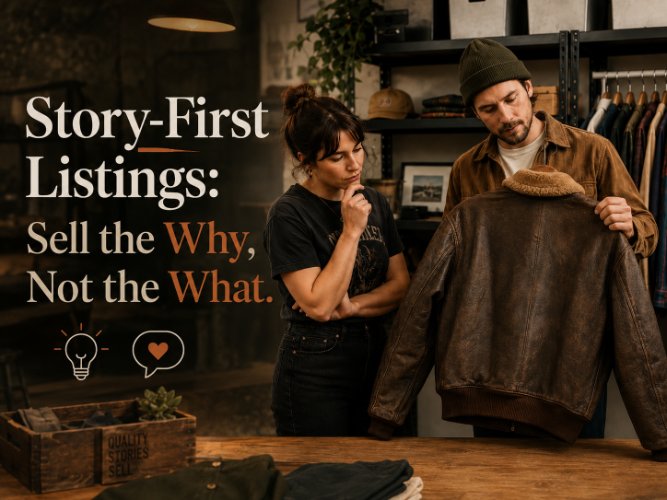
Turn boring product listings into story-first listings that hook buyers fast and boost conversions across every reselling marketplace you use.
That difference—between listing the facts and selling the story—is often the gap between a browser scrolling past and a buyer clicking “Add to cart” or “Buy now.”
You don’t need to be a professional copywriter to write better listings. You just need a simple framework that helps you sell the why, not just the what, across eBay, Poshmark, Mercari, Depop, and Facebook Marketplace.
In this post, you’ll learn how to turn dry, feature-only descriptions into story-first listings that hook buyers fast, reduce questions, and work beautifully with a crosslisting workflow using tools like FusionLister.
Why Story-First Listings Work Better
Buyers care about details—brand, size, condition, color—but that’s not why they purchase. They buy because they imagine:
- Looking sharp at work or a special event
- Finally replacing a frustrating old gadget
- Decorating a room they actually enjoy being in
- Finishing a collection they’ve been working on for years
Story-first listings help them see that future clearly.
Instead of dumping specs, you give them a quick mental picture: who this is for, when they’ll use it, and why it’s the right choice. That emotional connection often beats a similar item with a bland description—even at a slightly higher price.
The Simple Story-First Listing Formula
You don’t need long descriptions to tell a story. In fact, shorter is usually better. Use this simple three-line structure:
- Who it’s for – the type of person or situation.
- When or where they’ll use it – a clear use case.
- Why it’s a good choice – a benefit or standout detail.
Then follow with your normal details: condition, measurements, material, and any flaws.
Here’s what that looks like in action.
Fashion Example
Basic listing:
“Madewell women’s blue denim jacket, size medium. Good used condition. No stains or holes.”
Story-first listing:
“Perfect everyday denim jacket for casual office days, weekend errands, or travel. Medium wash that layers easily over tees or sweaters without feeling bulky. Quality Madewell fit and construction that holds up season after season. Gently worn, no stains or holes—ready to wear.”
Tech Example
Basic listing:
“Logitech wireless mouse model M510, black, tested and working.”
Story-first listing:
“Reliable wireless mouse for work, school, or your home office setup. Comfortable shape that feels good in hand during long days at the computer. Logitech M510 model—known for smooth tracking and long battery life. Fully tested, includes USB receiver and ready to plug in and go.”
Home Decor Example
Basic listing:
“IKEA floor lamp, white shade, 60 inches tall.”
Story-first listing:
“Simple, soft-glow floor lamp that instantly warms up a bedroom, living room, or reading corner. Clean white shade that works with most decor styles. Slim design fits easily in smaller spaces or apartments. 60" tall, tested and working—just add your favorite bulb.”
Notice how each upgraded version answers: Who is this for? When will they use it? Why is this the right item?
Adapting Story-First Copy to Each Marketplace
Different platforms have different vibes. The core story formula stays the same, but the tone and emphasis can shift slightly.
eBay
Buyers often search with intent and care about details.
- Lead with one or two story sentences, then go heavy on specs and condition.
- Use bullets for important features: brand, model, size, measurements.
- Include keywords naturally so search still works: brand + item type + key features.
Poshmark
Fashion-focused with a social feel.
- Lean into outfit ideas: where they’ll wear it, how to style it.
- Mention fit (true to size, relaxed, cropped, etc.) to reduce returns.
- Use a friendly, conversational tone.
Mercari
Broad mix of buyers and categories.
- Keep your story tight—1–2 sentences max before details.
- Highlight practicality: easy to use, great starter item, perfect backup.
- Include condition transparency to build trust quickly.
Depop
Younger audience and trend-driven.
- Focus on aesthetic, vibe, and trend names (Y2K, vintage, archive, streetwear).
- Describe how it fits into a look or style (for example, “pair with cargos and platforms”).
- Short, punchy sentences work best.
Facebook Marketplace
Local plus shipping buyers, mix of impulse and practical purchases.
- Include a brief use case (for kids, for small apartments, for home office).
- Clarify pickup vs. shipping to cut back-and-forth messages.
- Highlight urgency if relevant (“Perfect for upcoming move/semester/season”).
Where to Add Story in Your Listing Workflow
If you’re crosslisting with a tool like FusionLister, you don’t want to write five different descriptions from scratch. Instead:
- Write one strong story-first description in your main template.
- Use that as your “master” description when creating the listing.
- Make small, platform-specific tweaks only where needed (for example, add trend tags for Depop, extra measurements for eBay).
Over time, you can create a few reusable story templates by category:
- Everyday basics (tees, jeans, hoodies)
- Work and special occasion pieces
- Tech and electronics
- Home and decor
- Hobby and collectible items
Drop in details (brand, size, material) and you’ve got a fast, repeatable way to write listings that feel personal without taking forever.
Quick Story Prompts for Common Categories
Use these prompts to speed up your writing when you feel stuck.
Clothing & Shoes
- Who will wear this? (office worker, student, traveler, new parent)
- Where will they wear it? (office, weekend, date night, vacation)
- Why is it a good choice? (comfortable, versatile, durable, easy to style)
Electronics & Gadgets
- What problem does it solve? (slow computer, bad lighting, low storage)
- Is it a main device or backup?
- Why this one? (reliable brand, easy setup, budget-friendly)
Home & Kitchen
- What space will it improve? (small kitchen, home office, bedroom)
- Is it about function, style, or both?
- What’s the everyday benefit? (saves time, saves space, looks better)
Collectibles & Hobby Items
- Is this for a beginner or a serious collector?
- Does it complete a set or help them start one?
- What makes it special? (rare, out of print, limited run)
Answering just one or two of these questions in a sentence or two is enough to bring your listing to life.
Before and After: Transform One of Your Listings
To feel the difference, grab a current listing that isn’t getting much attention and:
- Copy the existing description into a document.
- Write a new first 2–3 sentences using the who/when/why formula.
- Keep your original details below that (measurements, condition, etc.).
- Update the listing across your marketplaces using your crosslisting tool.
Watch what happens over the next 7–14 days: more saves, more questions, more offers, or a faster sale. Once you see it work on one item, you’ll want to apply it to more.
Turn Browsers into Buyers with Better Stories
You put time into sourcing, photographing, and listing. Don’t let flat copy be the weak link.
Story-first listings help buyers quickly understand why your item fits their life, not just their search query. You’ll stand out even in crowded categories, and you don’t have to race to the bottom on price.
Start simple:
- Add one story sentence to five listings today.
- Use the who/when/why formula when creating new listings.
- Let FusionLister help you reuse strong, story-first descriptions across all your marketplaces.
Over time, you’ll build a store full of listings that feel more like solutions than random products—and that’s what gets buyers to click “Buy.”