The 3-Second Rule: What Buyers Actually Notice First
By David Torsak
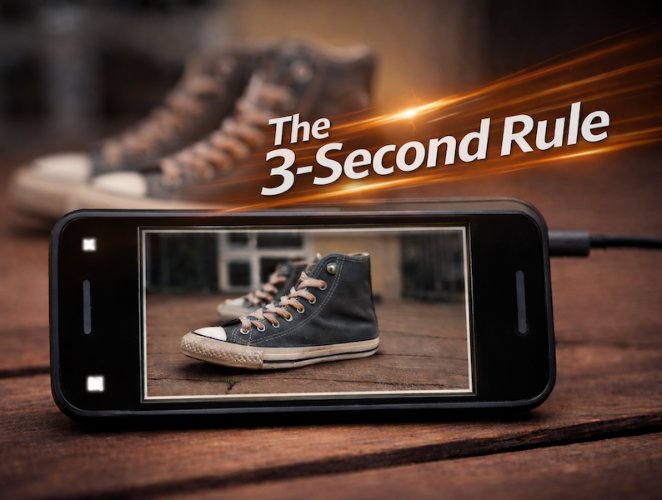
Online buyers don’t “shop,” they scan. In the first three seconds, they’re not trying to fall in love with your item. They’re trying to answer one question fast: Is this worth clicking? If your listing makes that answer obvious, you win the click. If it creates even a tiny moment of doubt, they scroll.
The 3-Second Rule: What Buyers Actually Notice First
Online buyers don’t “shop,” they scan. In the first three seconds, they’re not trying to fall in love with your item. They’re trying to answer one question fast: Is this worth clicking? If your listing makes that answer obvious, you win the click. If it creates even a tiny moment of doubt, they scroll.
Why 3 Seconds Matters More Than Your Whole Description
Your description can be perfect and still not get read. Because the description only matters after the buyer has already chosen to slow down. The 3-second moment happens before commitment, before curiosity, before emotion. It’s a speed test of clarity and trust. When you build listings for that moment, everything else becomes easier: more clicks, more watchers, more offers, and cleaner sales.
What Buyers Actually Notice First (In Order)
Most buyers notice the same things in the same sequence:
They see the main photo first. Then their eyes bounce to price, shipping, and condition cues. They glance at the first words of your title. If anything looks confusing, risky, or low effort, they’re gone.
This isn’t personal. It’s just the internet. Buyers are protecting their time and money.
The Main Photo: The Instant “Trust Test”
Your first photo is not just an image. It’s your credibility.
In three seconds, buyers are subconsciously judging: Is the item clearly visible? Is the lighting clean? Does this look like a real seller? Is there anything suspicious or messy? Is the item framed so I can identify it without squinting?
A strong main photo feels simple and confident. A weak main photo feels like work.
The “Phone Screen Problem”: If It’s Not Obvious Small, It’s Not Obvious
Most people shop on a phone. That means your beautiful details don’t matter if the item isn’t instantly recognizable at thumbnail size.
If your item blends into the background, if the angle is weird, if there’s clutter, if the photo is too dark, or if the item is too far away, the buyer can’t process it fast enough. They won’t stop to figure it out. They’ll stop for the listing that makes sense immediately.
Price: The First Comparison They Make
Buyers don’t evaluate your price in a vacuum. They compare it to expectations.
In three seconds, they’re asking: Does this price match what I think this item should cost? Does it feel like a deal, fair, or overpriced? If it feels high, they need instant reasons to trust it’s worth it—clean photos, clear condition, and strong item identification.
Price isn’t just math. It’s perception.
Shipping: The Silent Dealbreaker
Shipping is a bigger psychological factor than most sellers realize.
If shipping feels slow, expensive, unclear, or risky, buyers hesitate. In that split-second scan, buyers prefer certainty. Fast handling, reasonable shipping, and clear expectations reduce friction. Friction kills clicks.
Condition Signals: Buyers Are Hunting for Risk
Even if you never type the word “condition,” buyers are looking for clues.
They zoom mentally. They scan for wear. They look for missing pieces. They look for the kind of photo that hides flaws. The more you look like you’re hiding something, the more they assume there’s something to hide.
Confidence sells. Clarity sells. Honesty sells.
The First Words of Your Title: Identity First, Not Poetry
Your title is not a sentence. It’s a label.
In three seconds, buyers are scanning the start of your title for the basics: brand, item type, model, category keywords, size, material, and the one standout feature that makes it special. If the beginning of your title is vague, cute, or cluttered with fluff, you lose the moment.
You don’t need more words. You need the right words first.
The Background and Presentation: “Is This Seller Legit?”
Presentation is a trust shortcut.
A clean background and consistent lighting tell the buyer you’re careful. Careful sellers feel safer. Safe sellers get clicks. Messy backgrounds, distracting carpets, dim rooms, and chaotic surroundings signal uncertainty—even if your item is great.
Buyers don’t want to gamble. They want to buy.
The “Effort Aura”: Buyers Can Sense Work Ethic
This is real: buyers can feel effort.
Listings that look intentional get attention. Listings that look thrown together get ignored. Even when the item is identical, the listing that feels more professional will win the click—often at a higher price.
Effort is a competitive advantage that costs you nothing but discipline.
The 3-Second Upgrade: A Simple Way to Fix Any Listing
Before you list (or when you relist), do this fast check:
Look at your listing like a stranger. Pretend you’re scrolling quickly. If you can’t identify the item instantly, retake the main photo. If the price looks high compared to the “vibe” of the listing, improve clarity and condition proof. If shipping feels uncertain, tighten your handling and communicate it. If the first words of the title don’t scream what it is, rewrite them.
Your goal is simple: remove confusion and remove doubt.
Examples of Tiny Fixes That Create Big Click Increases
A brighter main photo can beat ten extra keywords. A tighter crop can outperform a fancy background. A clear size photo can reduce hesitation. A clean title opener can improve search and scanning at the same time. A visible condition close-up can turn fear into confidence.
Small changes don’t feel exciting—but they compound like crazy.
Final Thought: Clicks Are Earned Before Interest Exists
Buyers don’t click because your description is amazing. They click because your listing feels obvious, safe, and worth their time in the first three seconds.
Master the 3-second rule and you’ll notice something powerful: you’ll spend less time waiting for sales and more time choosing what you want to sell next.