The Buyer Trust Checklist for Resellers
By David Torsak
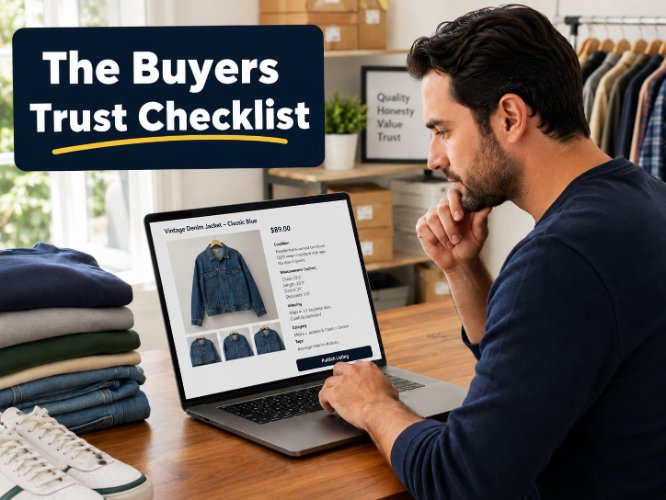
When someone shops online, they cannot hold the product, check the fabric, inspect the flaws, try it on, or ask you questions in person. They only have your listing to decide whether they trust the item, the condition, the price, and the seller.
The Buyer Trust Checklist for Resellers
A buyer does not just buy your item.
They buy confidence.
When someone shops online, they cannot hold the product, check the fabric, inspect the flaws, try it on, or ask you questions in person.
They only have your listing to decide whether they trust the item, the condition, the price, and the seller.
That is why buyer trust matters so much in reselling.
You may have a great item at a fair price, but if the listing feels unclear, incomplete, or risky, buyers may keep scrolling. The good news is that trust can be built with a few simple improvements.
Use this buyer trust checklist to make your listings easier to click, easier to understand, and easier to buy.
Why Buyer Trust Creates More Sales
Most buyers are not looking for reasons to take a risk.
They are looking for reasons to feel safe.
A strong listing helps the buyer answer important questions quickly. What is the item? What size is it? What condition is it in? Are there flaws? Will it fit? Is the price fair? Does the seller seem honest?
When those questions are answered clearly, buyers are more likely to make an offer or purchase.
When those questions are missing, buyers hesitate.
Trust is what turns a view into a sale.
Start With Clear, Bright Photos
Photos are the first trust signal.
If your photos are dark, blurry, cluttered, or confusing, buyers may assume the item is not worth their time. A clean first photo makes the listing feel more professional before the buyer even reads the description.
Use bright lighting, a simple background, and clear angles. Show the item from the front, back, sides, tags, labels, size, and important details.
For shoes, show the soles, insides, heel wear, and size tag. For clothing, show the front, back, fabric, brand tag, size tag, measurements, and flaws. For bags, show the inside, corners, zipper, straps, and hardware.
The more clearly buyers can inspect the item, the more confident they feel.
Show Flaws Instead of Hiding Them
Hiding flaws does not build trust.
It creates returns, complaints, and disappointed buyers.
If an item has a stain, scratch, missing button, worn sole, small hole, loose thread, fading, discoloration, or damaged zipper, show it clearly
in the photos and mention it in the description.
This does not always ruin the sale. Many buyers are fine with minor flaws if they know about them before purchasing.
Honest condition notes help buyers trust you.
A buyer may still purchase a flawed item. But they are less likely to forgive a flaw that was hidden.
Write Titles That Match Buyer Searches
A trustworthy title is clear and accurate.
Do not make buyers guess what the item is. Include the brand, item type, size, color, style, and important details when they apply.
Instead of:
Cute Top
Write:
Madewell Linen Blend Top Women’s Medium White Sleeveless
Instead of:
Cool Shoes
Write:
Nike Running Shoes Men’s Size 10 Black Mesh Sneakers
Instead of:
Vintage Bag
Write:
Vintage Leather Crossbody Bag Brown Adjustable Strap
The title should help the right buyer find the item and understand it fast.
Avoid keyword stuffing. Do not add brands, trends, or styles that do not apply. Misleading keywords may get clicks, but they do not build trust.
Include Measurements When Fit Matters
Measurements can be the difference between hesitation and purchase.
Clothing sizes are not always consistent. A medium in one brand may fit like a small in another. Vintage sizing can be even more unpredictable.
Add basic measurements to help buyers decide.
For tops, include pit-to-pit and length. For pants, include waist, rise, inseam, and leg opening. For dresses, include bust, waist, hips, and length. For bags, include width, height, depth, and strap drop.
Measurements reduce buyer questions.
They also make your listing feel more complete and professional.
Make the Description Simple and Useful
A good description does not need to be long.
It needs to be helpful.
Include the basic information a buyer needs: brand, size, color, condition, material, measurements, flaws, and any special details. Keep it easy to scan and easy to understand.
A simple description might look like this:
Pre-owned Levi’s jeans in good condition. Women’s size 28. Medium blue wash with straight leg fit. No major flaws noticed. Measurements are shown in photos. Please review all photos for condition and details.
That is enough for many listings.
Clear beats clever. Honest beats salesy.
Be Clear About Condition
Condition is one of the biggest buyer trust factors.
Do not rely only on vague words like “good” or “nice.” Explain what that means.
Is the item new with tags? New without tags? Pre-owned with light wear? Gently used? Vintage with normal age-related wear? Tested and working? Missing original packaging?
The more specific you are, the fewer surprises the buyer has.
For example:
Good pre-owned condition with light normal wear. No stains or holes noticed.
Or:
Tested and working. Includes charger. Light scratches from normal use.
Buyers do not expect every secondhand item to be perfect.
They expect the listing to be honest.
Price Like You Understand the Market
Trust is also connected to price.
If your item is priced far above similar sold listings, buyers may hesitate. If it is priced too low, they may wonder if something is wrong. A fair price makes the listing feel more believable.
Check sold comps before pricing.
Look at similar items in similar condition, size, style, and brand. Active listings show what sellers are asking. Sold listings show what buyers actually paid.
If your price is higher, make sure there is a reason. Maybe your item is in better condition, a rare size, a better color, or includes original packaging.
Pricing should support confidence, not confusion.
Make Shipping Feel Easy
Shipping confusion can kill a sale.
Buyers want to know what they are paying and how the item will arrive. High shipping costs, unclear shipping methods, or long handling times can make them pause.
Use accurate weight and package size when possible. Choose shipping options that make sense for the item. Ship quickly and package items cleanly.
For fragile items, mention that they will be packed carefully. For shoes, bags, or clothing, make sure packaging protects the item from damage.
A good shipping experience can turn a one-time buyer into a repeat buyer.
Use Crosslisting Carefully
Crosslisting can help your items reach more buyers, but it also requires organization.
If an item is listed on eBay, Poshmark, Mercari, Depop, or another marketplace, make sure you can remove it quickly once it sells. Nothing
damages buyer trust faster than selling an item and then realizing it already sold somewhere else.
Crosslisting works best when your inventory is organized and synced.
More reach is powerful.
But buyer trust depends on accuracy.
The Buyer Trust Checklist
Before publishing your next listing, ask yourself:
Is the first photo clear and bright?
Did I show the item from multiple angles?
Did I photograph flaws clearly?
Does the title include searchable details?
Did I add measurements where they matter?
Is the description simple and honest?
Is the condition clearly explained?
Did I check sold comps before pricing?
Is shipping accurate and easy to understand?
Can I find the item quickly if it sells?
If you can answer yes to most of these, your listing is already stronger than many others.
Reseller Challenge: Fix 10 Trust Gaps
This week, choose 10 active listings and look for trust gaps.
A trust gap is anything that could make a buyer hesitate. Maybe the first photo is too dark. Maybe the title is too vague. Maybe the condition is unclear. Maybe the listing has no measurements. Maybe the shipping feels too high. Maybe the item is not crosslisted where
the right buyer might see it.
Fix one trust gap on each listing.
Then watch what happens over the next seven days. Track views, likes, offers, questions, and sales.
Small trust improvements can create real movement.
Final Thoughts
Buyer trust is one of the most underrated parts of reselling.
A great item is not enough if the listing creates doubt. Buyers need clear photos, honest condition notes, accurate titles, helpful measurements, fair pricing, and easy shipping.
The more confidence your listing creates, the easier it becomes for someone to click, offer, and buy.
Trust sells.
And the best part is that you can improve it today.