The First 10 Items Every New Reseller Should Buy
By David Torsak
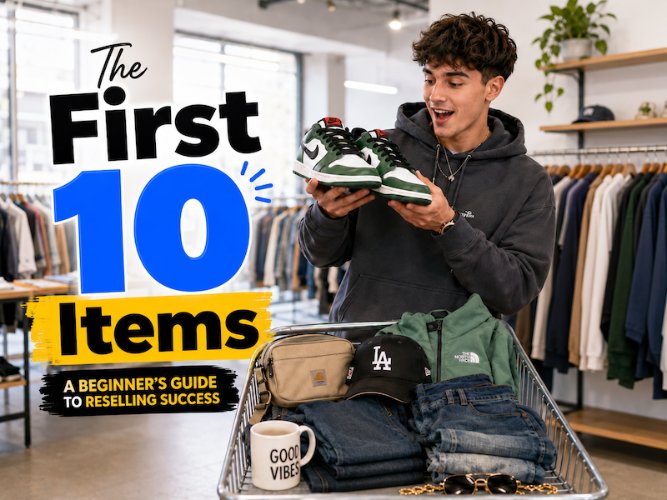
Starting a reselling business with a small budget can feel overwhelming. You walk into a thrift store, yard sale, or discount bin and suddenly everything looks like it might be worth money.
The First 10 Items Every New Reseller Should Buy
Starting a reselling business with a small budget can feel overwhelming. You walk into a thrift store, yard sale, or discount bin and suddenly everything looks like it might be worth money.
That is where beginners get stuck.
The fastest way to start making progress is to stop trying to source everything and focus on simple, beginner-friendly items that are easy to research, easy to list, easy to ship, and likely to have buyer demand.
If you are starting with around $100, your goal is not to buy the most exciting inventory. Your goal is to buy smart, list quickly, and turn that first small batch into profit.
Why Your First 10 Items Matter
Your first 10 items teach you the full resale process.
You will learn how to check comps, take photos, write titles, price items, package orders, and deal with buyer questions. That is why your first items should be manageable.
Avoid fragile, oversized, expensive, or hard-to-authenticate items at the beginning. Those can come later. For now, choose products that are simple enough to help you build confidence and momentum.
A good beginner item should have clear demand, visible condition, easy shipping, and enough profit after fees and supplies.
1. Name-Brand Shoes
Shoes are one of the best beginner categories because buyers actively search by brand, style, size, and color.
Look for clean sneakers, sandals, athletic shoes, casual shoes, boots, and comfort shoes from recognizable brands. Shoes with strong tread, clean interiors, and minimal wear are usually easier to sell.
Before buying, check soles, insoles, heel wear, odor, stains, cracks, and separation. Shoes can be profitable, but condition matters a lot.
For a $100 budget, try not to spend too much on one pair unless the comps clearly support it.
2. Lightweight Jackets
Lightweight jackets are great because they can work across seasons and often have strong visual appeal.
Look for windbreakers, denim jackets, track jackets, utility jackets, rain jackets, fleece jackets, and vintage-style outerwear. Brands, colors, patterns, and unique details can make a big difference.
A basic jacket may not be exciting, but a color-blocked windbreaker, embroidered denim jacket, or clean branded fleece can stand out in search results.
Check zippers, snaps, stains, cuffs, odors, and lining before buying.
3. Hats and Caps
Hats are small, easy to store, and usually simple to ship.
Look for baseball caps, trucker hats, golf hats, vintage-style hats, outdoor brand hats, sports team hats, tourist hats, and branded caps. A hat with a good logo, team, place, brand, or style can attract buyers.
Condition is important. Check sweatbands, stains, fading, misshapen crowns, and worn brims.
Hats can be a great low-cost category for beginners because you can often source them cheaply and list them quickly.
4. Bags and Small Purses
Bags are useful, searchable, and popular across many platforms.
Look for crossbody bags, belt bags, backpacks, tote bags, travel pouches, wallets, cosmetic bags, and small purses. Buyers often search by brand, material, color, style, and function.
Check the zipper, straps, corners, lining, hardware, stains, and odors. A bag can look good from the outside but have damage inside, so always inspect carefully.
For beginners, small and medium bags are usually easier than large luggage or luxury handbags.
5. Jeans and Casual Pants
Jeans can be a strong resale category because buyers often search by brand, size, fit, rise, inseam, wash, and style.
Look for popular cuts like straight leg, wide leg, flare, bootcut, relaxed fit, cargo, carpenter, and vintage-inspired jeans. Good brands and current silhouettes matter.
Always check the crotch, hems, pockets, zipper, buttons, stains, stretch, and wear. Measurements are also important because sizing can vary between brands.
Jeans may take slightly more work to list, but they are a solid beginner category if you learn what buyers want.
6. Small Electronics and Accessories
Small electronics can sell well, but beginners should keep it simple.
Look for remotes, chargers, adapters, headphones, calculators, handheld games, camera accessories, keyboards, computer mice, and small tested devices. These items can be easy to store and ship.
The key word is tested. If you cannot test it, be careful. Untested electronics can turn into returns, complaints, or wasted money.
Check battery compartments, cords, buttons, screens, model numbers, and whether accessories are included.
7. Toys and Games
Toys and games can be excellent beginner finds, especially if they are complete, clean, and recognizable.
Look for action figures, plush, board games, puzzles, building sets, dolls, vintage toys, learning toys, and popular character items. Some toys sell better individually, while others work better as bundles.
Check for missing pieces, stains, odors, broken parts, and battery corrosion.
For board games and puzzles, make sure the pieces are complete when possible. If not, clearly disclose missing parts or consider selling pieces as replacements.
8. Mugs and Small Kitchen Items
Mugs and small kitchen items are common at thrift stores and yard sales, but you need to be selective.
Look for mugs with strong themes, brands, destinations, humor, vintage designs, holiday appeal, or collectible value. Also check for small kitchen tools, measuring cups, unique serving pieces, and specialty gadgets.
Avoid generic mugs unless they have something special about them.
Check chips, cracks, fading, stains, and dishwasher wear. Fragile items require better packing, so make sure the profit is worth the extra care.
9. Books and Media
Books can be a good low-cost category if you know what to scan for.
Look for textbooks, niche nonfiction, hobby books, cookbooks, vintage books, box sets, manga, graphic novels, religious books, and collectible editions. DVDs, CDs, and video games can also sell if demand is there.
Condition matters, but many buyers are fine with used books if the listing is honest.
Check for writing, missing pages, water damage, odors, cracked cases, scratched discs, and whether sets are complete.
10. Accessories and Small Wearables
Accessories can be one of the easiest categories for a new reseller because they are small, lightweight, and often inexpensive to source.
Look for belts, scarves, sunglasses, ties, jewelry, watches, gloves, wallets, patches, pins, and small collectible wearables.
The best accessories usually have a clear style, brand, material, theme, or trend. A plain belt may not be exciting, but a tooled leather belt, western belt, designer-style scarf, vintage brooch, or retro sunglasses can catch attention.
Inspect for scratches, missing stones, broken clasps, tarnish, stains, and wear.
How to Spend Your First $100
Do not spend the full $100 on only two or three items unless you are very confident in the comps.
A smarter beginner approach is to spread your money across several low-risk items. For example, you might buy two pairs of shoes, two hats, one jacket, one bag, two accessories, one toy, and one pair of jeans.
That gives you variety and helps you learn which categories feel easiest for you.
Try to keep most beginner buys under $10 each. This lowers your risk and gives you more chances to practice.
What to Check Before You Buy
Before anything goes in your cart, check sold comps.
Look up the brand, item type, size, model, color, and condition. Do not only look at active listings. Active listings show what sellers are asking. Sold listings show what buyers actually paid.
Then ask yourself:
Can I sell this for enough profit?
Is it clean and complete?
Is it easy to ship?
Can I list it quickly?
Would I feel confident describing this item?
If the answer is no, leave it behind.
Your 48-Hour Rule
The biggest mistake beginners make is buying inventory and then letting it sit.
To avoid building a death pile, use the 48-hour rule: anything you buy should be photographed, listed, or at least drafted within 48 hours.
This keeps momentum high and helps you turn your $100 investment back into cash faster.
Sourcing does not make money by itself. Listing does.
Beginner Challenge: Buy and List 10 Items
Here is your challenge:
Take your first $100 and source 10 beginner-friendly items from the categories above.
Before buying, check sold comps. After buying, list every item within 48 hours. Then track views, likes, offers, and sales for the next seven days.
Your goal is not perfection. Your goal is learning what sells, what is easy to list, and what categories you want to keep sourcing.
Final Thoughts
The best first 10 items are not always the flashiest.
They are the items that help you learn the business without taking on too much risk. Shoes, hats, bags, jackets, jeans, toys, books, small electronics, mugs, and accessories can all be strong beginner categories when you buy carefully.
Start small. Check comps. Protect your budget. List fast. Learn from every sale.
That is how a $100 start can become the beginning of a profitable reselling business.