The One Listing, Five Uses Content Strategy
By David Torsak
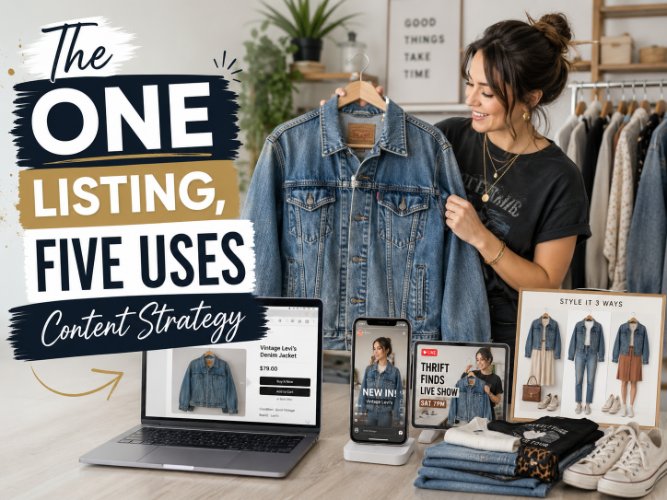
If you have a great item, good photos, and a clear description, you already have the foundation for more than a marketplace listing. You have content. You have a story. You have a social post. You have a live show teaser. You have a bundle idea. You have an email feature. You have multiple ways to get that item in front of buyers.
The One Listing, Five Uses Content Strategy
Most resellers work hard to create a good listing.
They photograph the item, write the title, add the description, check the price, choose the platform, and finally publish it.
Then they stop.
That is the mistake.
A strong listing should not live in only one place.
If you have a great item, good photos, and a clear description, you already have the foundation for more than a marketplace listing. You have content. You have a story. You have a social post. You have a live show teaser. You have a bundle idea. You have an email feature. You have multiple ways to get that item in front of buyers.
That is the idea behind the One Listing, Five Uses strategy.
Instead of creating a listing once and waiting for buyers to find it, you turn that one listing into five different opportunities to create attention, trust, and sales.
Why One Listing Should Work Harder
Resellers are busy.
You may not have time to create fresh content every day, film long videos, write emails, post on every platform, and still source, photograph, list, ship, and organize inventory.
That is why your best listings need to work harder.
If you already did the work to create a strong product listing, you should reuse that effort in smart ways. Your photos, item details, measurements, condition notes, styling ideas, and price can be used beyond the original marketplace.
This does not mean spamming the same thing everywhere.
It means giving one strong item more chances to be seen.
A buyer may not find your listing on eBay.
But they might notice it in an Instagram story.
They might see it in a TikTok video.
They might ask about it during a live show.
They might click it from an email.
They might buy it after seeing it styled with another item.
Visibility creates opportunity.
Use #1: The Marketplace Listing
The first use is the obvious one: the actual marketplace listing.
This is still the foundation.
Before you turn an item into content, make sure the listing itself is strong. A weak listing will not magically become strong because you shared it on social media.
Start with the basics.
Use clear photos, a searchable title, accurate condition notes, measurements, strong keywords, and fair pricing. Show flaws. Mention fabric, fit, brand, size, color, and shipping details when relevant.
The marketplace listing should answer the buyer’s questions before they have to ask.
Once the listing is solid, you can build from it.
Think of the marketplace listing as the home base. Every other piece of content should point back to the same goal: helping the right buyer notice the item and feel confident enough to purchase.
Use #2: The Social Story
The easiest second use is a quick social story.
This can be an Instagram story, Facebook story, short post, or simple behind-the-scenes update.
You do not need a full photo shoot.
Use your strongest listing photo and add a short caption that creates interest.
For example:
“Just listed: the perfect campus hoodie.”
“Vintage denim jacket just hit the shop.”
“Clean sneakers, ready for back-to-school season.”
“New arrival: lightweight summer dress with easy weekend style.”
The goal is not to write a long sales pitch.
The goal is to create a quick moment of attention.
Social stories work well because they feel immediate. They remind your audience that new items are going live, and they give interested buyers a reason to click before someone else does.
Use #3: The Short Video or Reel
A single listing can also become a short video.
This is where you show the item in motion.
For clothing, show the texture, tag, front, back, details, buttons, zipper, hem, or fit. For shoes, show the sides, soles, insides, and condition. For bags, show the compartments, strap, hardware, and lining. For collectibles, show close-ups, scale, and packaging.
Keep the video simple.
A strong short video could include:
A quick item reveal.
Three detail shots.
One condition note.
One styling idea.
A final “listed now” message.
You do not need to be on camera if you do not want to. Hands, flat lays, racks, and product close-ups can work.
The point is to give buyers more confidence.
Photos show the item.
Video helps buyers feel the item.
Use #4: The Live Show Teaser
If you sell live on platforms like Whatnot, TikTok Live, Instagram Live, or any live selling format, one strong listing can become a teaser.
A teaser helps buyers know what is coming before the show starts.
Instead of simply saying, “Join my live sale,” show one item that makes people curious.
For example:
“This jacket is going into tonight’s live show.”
“Starting this one low during tomorrow’s sale.”
“Preview item: clean vintage activewear drop.”
“Bringing this pair of sneakers to the live show tonight.”
This works because buyers need a reason to show up.
A strong item can become the hook.
You can also use several listings to create a theme for your live show. One denim jacket, a pair of sneakers, and two graphic tees could become a “campus casual” show. A few vintage sportswear pieces could become an activewear drop. Several small accessories could become a giftable finds show.
The listing becomes more than an item.
It becomes part of an event.
Use #5: The Bundle or Styling Idea
One listing can also inspire a bundle.
This is especially useful for lower-priced items or pieces that make more sense when paired with something else.
A hoodie can pair with sneakers.
A dress can pair with a bag.
A graphic tee can pair with jeans.
A dorm item can pair with storage accessories.
A travel pouch can pair with a tote.
A bundle helps buyers imagine how the item fits into their life.
Even if the buyer does not purchase the full bundle, the styling idea can make the original item more appealing.
This is also a smart way to move related inventory. If you have several pieces that fit the same buyer, theme, size, season, or style, connect them.
A single listing can become the anchor for a bigger sale.
Bonus Use: The Email Feature
If you have an email list, a strong listing can become a quick email feature.
You do not need a long newsletter.
A simple product spotlight can work.
For example:
“New Find of the Week: Vintage Denim Jacket”
Then include a short description, why it is worth checking out, size, condition, and a clear call to action.
This works especially well for standout items, seasonal pieces, limited inventory, or items with a strong story.
Email can be powerful because it reaches buyers outside the marketplace algorithm. You are not waiting for someone to search. You are bringing the item directly to people who already care about your store.
Even a small email list can help if the audience is interested and targeted.
Choose the Right Item First
Not every listing needs five uses.
That would become overwhelming.
The strategy works best when you choose the right items.
Start with your strongest inventory.
Look for items with good photos, clear demand, strong condition, seasonal relevance, visual appeal, or a good story.
Great candidates include:
Unique vintage pieces.
Clean sneakers.
Popular brands.
Seasonal items.
Trendy clothing.
Higher-profit items.
Items with strong styling potential.
Items that already have likes or watchers.
Do not spend extra content energy on every low-value item in your store.
Use this strategy for the listings that deserve more attention.
Turn One Listing Into a Weekly Content Routine
The easiest way to use this strategy is to make it part of your weekly routine.
Choose one strong item each week.
Then turn it into five simple pieces:
Marketplace listing.
Social story.
Short video.
Live show teaser.
Bundle or styling post.
That is it.
One item becomes five chances to be seen.
If you do this every week, you will create more content without constantly starting from scratch.
Over time, this also teaches you which content creates the most buyer activity. You may notice that videos drive more questions, stories drive quick clicks, bundles increase average order value, or live teasers bring more viewers.
The more you test, the smarter your marketing becomes.
Keep the Message Simple
When turning one listing into multiple pieces of content, do not overcomplicate the message.
Buyers need to know three things:
What is it?
Why should they care?
How can they buy it?
That is enough.
A social story does not need a paragraph.
A short video does not need a full script.
A live teaser does not need every detail.
The goal is to create interest and point buyers toward the listing.
Keep your captions short, clear, and buyer-focused.
For example:
“Just listed: vintage Nike crewneck, size large. Soft, clean, and perfect for casual layering.”
“New drop: leather campus tote with zip closure and roomy interior.”
“Almost sold alert: this jacket has watchers. Sending offers today.”
Clear beats clever when buyers are ready to shop.
Use Crosslisting to Extend the Strategy
The One Listing, Five Uses strategy becomes even stronger when your item is crosslisted.
If a listing is only on one platform, every piece of content has only one destination.
But if the item is listed across the right marketplaces, buyers have more ways to find it and purchase it.
That does not mean every item belongs everywhere.
Choose platforms based on the item.
Trendy fashion might fit Poshmark, Depop, and eBay.
Sneakers may fit eBay, Poshmark, and Mercari.
Collectibles may fit eBay and Mercari.
Local or bulky items may fit Facebook Marketplace.
The more organized your crosslisting system is, the easier it becomes to market confidently without creating inventory confusion.
This is where a tool like FusionLister fits naturally into the workflow. When resellers can list faster, crosslist smarter, and keep inventory organized, they can spend more energy creating demand instead of repeating manual listing work.
Track What Happens
A content strategy should not just create activity.
It should teach you what works.
After you promote a listing in multiple ways, watch what happens.
Did views increase?
Did likes or watchers increase?
Did someone ask a question?
Did an offer come in?
Did the item sell?
Did one platform respond better than another?
Did the video outperform the static post?
Did the bundle idea create interest?
This information helps you improve future listings and content.
You may discover that your audience responds best to styling ideas, behind-the-scenes photos, live show previews, or quick item videos.
Use that information.
Do more of what creates buyer action.
Your One Listing, Five Uses Challenge
This week, choose one strong listing.
Pick an item with good photos, clean condition, and real sales potential.
Then use it five ways:
Publish or refresh the marketplace listing.
Post it as a social story.
Film a short video or product detail clip.
Mention it as a live show teaser or featured item.
Create a bundle or styling idea around it.
After seven days, review the results.
You are not trying to become a full-time content creator.
You are trying to make one good listing work harder.
Final Thoughts
A strong listing should not sit quietly and hope to be found.
It should create momentum.
The One Listing, Five Uses strategy helps resellers get more value from the work they are already doing. Instead of creating endless new content from scratch, you turn one good item into multiple buyer touchpoints.
One listing can become a marketplace post, a story, a short video, a live show teaser, a bundle idea, and even an email feature.
That is smarter marketing.
That is better visibility.
That is how good inventory gets more chances to sell.
Before you create something new, look at the listings you already have.
One of them may be ready to do more.