The Small Store Advantage: How Part-Time Resellers Can Still Win
By David Torsak
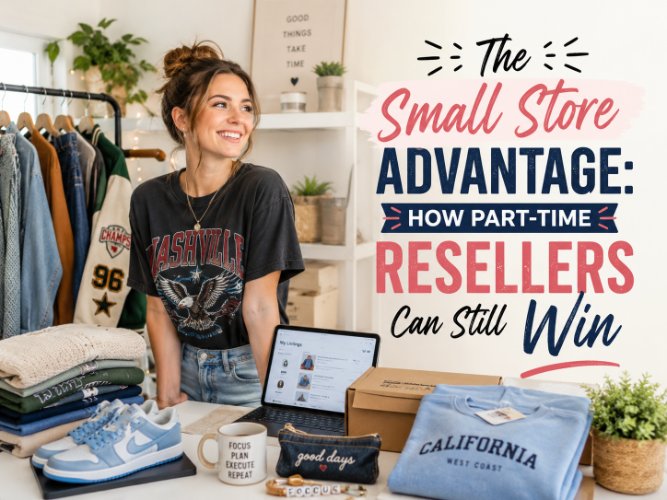
Part-time resellers have an advantage when they use their time carefully. A smaller store can be cleaner, more focused, easier to manage, more personal, and more intentional than a large store full of weak inventory.
The Small Store Advantage: How Part-Time Resellers Can Still Win
It is easy for part-time resellers to feel outmatched.
Some sellers have thousands of listings. Some list every day. Some have full inventory rooms, hired help, daily live shows, social media content, and shipping systems that look impossible to compete with.
But a smaller store can still win.
You do not need 2,000 listings to build momentum.
You do not need to source every day.
You do not need to turn reselling into a full-time job before you start seeing real progress.
Part-time resellers have an advantage when they use their time carefully. A smaller store can be cleaner, more focused, easier to manage, more personal, and more intentional than a large store full of weak inventory.
The goal is not to look like a full-time reseller.
The goal is to sell smarter with the time, space, and inventory you actually have.
Why Small Stores Still Matter
Resale is not slowing down.
Secondhand shopping keeps becoming more normal, and buyers are still looking for value, quality, unique finds, discontinued styles, and better ways to stretch their budgets.
That creates room for small sellers.
A buyer does not care whether your store has 50 listings or 5,000 listings if the item they want is clear, fairly priced, well photographed, and easy to buy.
Small stores can compete because resale is often item-driven.
A great pair of sneakers, a strong denim jacket, a clean backpack, a vintage tee, a quality sweater, or a hard-to-find size can attract buyers even if the seller is not running a massive operation.
The opportunity is not only in having more listings.
It is in having better listings.
Your Store Does Not Need to Be Huge
Many part-time sellers think growth means adding as many listings as possible.
More listings can help, but only when those listings are good.
A small store with 75 strong listings can outperform a larger store filled with stale, poorly photographed, overpriced, or low-demand inventory.
The better question is not, “How many listings do I have?”
The better question is:
Are my listings worth clicking?
Are my photos clear?
Are my titles searchable?
Are my prices fair?
Are my items in demand?
Can buyers trust my descriptions?
Do I know where everything is stored?
A smaller store gives you a chance to control quality.
That is a real advantage.
Focus on Sell-Through, Not Just Listing Count
Listing count can make a store look bigger, but sell-through shows whether the store is actually moving.
Sell-through is a simple way to measure how much of your inventory is selling over a period of time.
If you have 100 active listings and sell 10 items in a month, your monthly sell-through rate is 10%.
If another seller has 1,000 active listings and sells 20 items in a month, they have more sales, but their inventory may be moving more slowly.
For part-time resellers, sell-through matters because time and space are limited.
You do not want to hold inventory forever.
You want items that have a real chance to sell.
A smaller store should be built around movement.
Choose Better Inventory
Small stores cannot afford to carry too many bad buys.
Every item takes space, time, attention, and energy.
That means your sourcing filter needs to be stronger.
Before buying, ask:
Does this item have buyer demand?
Can I make enough profit?
Is the condition strong?
Is it easy to photograph?
Is it easy to ship?
Would I list it this week?
Does it fit the kind of store I want to build?
That final question matters.
A small store feels stronger when the inventory makes sense together.
You do not need a perfect niche, but you should start noticing what sells for you and what does not.
The more disciplined your sourcing becomes, the easier your store becomes to manage.
Make Every Listing Feel Trustworthy
Trust is one of the biggest ways small sellers can compete.
Buyers want confidence. They want to know the item is real, clean, accurately described, and worth the price.
That starts with photos.
Use bright lighting, a clean background, and clear angles. Show the front, back, tags, measurements, details, and flaws. For shoes, show soles and insides. For bags, show interiors, straps, corners, and closures.
Then write descriptions that help buyers make decisions.
Include size, brand, condition, measurements, fabric, color, and any noticeable wear.
Do not hide flaws.
A buyer can handle normal wear if they know about it before purchasing.
A trustworthy listing can beat a cheaper listing with bad photos and vague details.
Use Your Size as a Strength
Large stores can feel impersonal.
Small stores can feel curated.
That is an advantage.
You can be more intentional with what you list. You can give items better photos. You can organize your inventory more carefully. You can respond thoughtfully. You can package with care. You can refresh listings without needing to review thousands of items.
Small sellers can also test faster.
You can try a category, track the results, and shift direction without being buried under hundreds of similar items.
If vintage tees are selling, list more.
If low-value tops are sitting, stop sourcing them.
If sneakers move quickly, make them a focus.
If a platform is not working, adjust where you list.
Smaller stores can stay flexible.
Crosslist Your Strongest Items First
Part-time resellers often do not have unlimited time, so crosslisting needs to be strategic.
Do not try to crosslist every item at once.
Start with your strongest inventory.
Choose items with clear demand, solid profit, clean condition, good photos, and strong keywords. These are the listings that deserve more visibility.
A quality jacket, clean sneakers, a popular brand hoodie, a vintage graphic tee, or a useful back-to-school item may perform better when it is visible on more than one marketplace.
Different buyers shop in different places.
Some search eBay first. Some prefer Poshmark. Some browse Mercari. Some shop Depop. Some look locally.
Crosslisting gives your best items more chances to find the right buyer.
Just make sure you keep inventory accurate when something sells.
Build a Simple Weekly Routine
A small store still needs consistency.
That does not mean listing all day.
It means creating a rhythm that fits your life.
A part-time weekly routine might look like this:
Photograph five items.
List five items.
Refresh five older listings.
Crosslist five strong items.
Send offers to interested buyers.
Review what sold.
That is manageable.
You can do it in a few short work blocks instead of trying to spend an entire day catching up.
The goal is not to do everything.
The goal is to keep your store active every week.
Small actions repeated consistently can create real progress.
Do Not Let Inventory Pile Up
Part-time resellers need to protect their space.
When unlisted inventory starts piling up, the business starts to feel heavier. It becomes harder to find items, harder to list, and harder to stay motivated.
Create a simple rule:
Do not source more than you can list.
That does not mean you can never buy ahead.
It means sourcing should not outrun your ability to process inventory.
A small store grows best when inventory keeps moving.
Source it.
Photograph it.
List it.
Store it.
Sell it.
Repeat.
Do not let your store become a storage project.
Refresh What Is Already Close
Small stores should pay attention to listings that already show buyer interest.
Look for likes, watchers, views, questions, and offers.
Those items may be close to selling.
Instead of always chasing new inventory, improve the listings that already have signals.
Retake the first photo.
Add measurements.
Update the title.
Adjust the price.
Send an offer.
Crosslist the item.
A part-time seller can create sales activity by working smarter on existing listings.
Sometimes the next sale is not hiding at the thrift store.
It is already sitting in your store waiting for a small push.
Give Buyers a Reason to Choose You
Small sellers can win by making the buying experience feel easy.
That means clear listings, accurate condition, fair pricing, fast shipping, careful packaging, and good communication.
You do not need to act like a big retailer.
You need to feel reliable.
Buyers notice when a seller has good photos, honest descriptions, and thoughtful details.
They notice when measurements are included.
They notice when flaws are shown clearly.
They notice when the item ships quickly.
That experience builds trust, and trust helps small sellers compete.
Your Small Store Advantage Challenge
This week, choose 20 active listings and review them like a buyer.
Ask:
Is the first photo strong?
Is the title searchable?
Is the condition clear?
Are measurements included?
Is the price fair?
Is the item on the right platform?
Could this item be crosslisted?
Does the listing feel trustworthy?
Then choose five listings to improve.
Do not rebuild your whole store.
Start with five.
Small improvements can create better buyer confidence, and better confidence can lead to more sales.
Final Thoughts
Part-time resellers can still win.
You do not need the biggest store.
You need a smarter one.
A smaller store can be focused, clean, trustworthy, flexible, and easier to manage. When you choose better inventory, improve your listings, crosslist your strongest items, and build a simple weekly routine, you give your store a real chance to grow.
Resale is still expanding, but buyers are becoming more selective.
That is good news for sellers who care about quality.
The small store advantage is not about doing less.
It is about doing the right things better.
Start there.