Why Back-to-School Buyers Want Value, Not Just Cheap Prices
By David Torsak
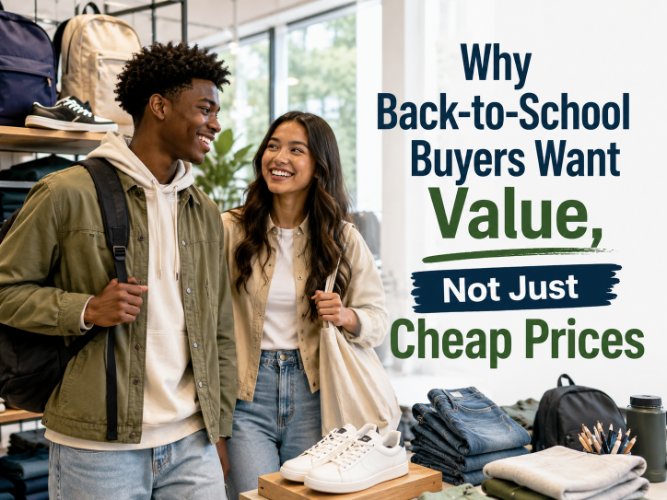
A parent shopping for school clothes, a college student looking for dorm basics, or a buyer searching for sneakers may not automatically choose the lowest-priced listing. They want confidence. They want quality. They want the right size, the right condition, the right brand, the right shipping timeline, and a listing that feels trustworthy.
Why Back-to-School Buyers Want Value, Not Just Cheap Prices
Back-to-school shopping is starting earlier, and buyers are being more careful with how they spend.
That does not always mean they want the cheapest item.
It means they want the item that feels like the smartest buy.
For resellers, this is an important difference.
A parent shopping for school clothes, a college student looking for dorm basics, or a buyer searching for sneakers may not automatically choose the lowest-priced listing. They want confidence. They want quality. They want the right size, the right condition, the right brand, the right shipping timeline, and a listing that feels trustworthy.
That is where resellers can win.
Secondhand does not have to mean “cheap.”
It can mean smart value.
Cheap and Valuable Are Not the Same Thing
A cheap item has a low price.
A valuable item makes the buyer feel like they are getting something worth buying.
That difference matters during back-to-school season because buyers are often shopping with a purpose. They need shoes that will last, jeans that fit, backpacks that can handle daily use, hoodies that feel current, dorm items that make life easier, and basics that can survive more than one wash.
If your listing only competes on price, you may train buyers to see your item as disposable.
But when your listing highlights condition, quality, fit, brand, durability, and usefulness, the item feels more valuable.
A $24 pair of clean name-brand jeans with measurements, clear photos, and fast shipping may feel like a better deal than a $12 pair with dark photos and no sizing details.
The buyer is not only asking, “What is cheapest?”
They are asking, “Which one feels safest to buy?”
Back-to-School Buyers Want Confidence
Confidence is one of the biggest parts of value.
Buyers want to know they are making the right choice. That is especially true when shopping secondhand because they cannot touch the item, try it on, or inspect it in person.
Your listing has to do that work for them.
That means clear photos, accurate descriptions, measurements, condition notes, and details that answer questions before the buyer has to ask.
For clothing, include size, brand, fabric, measurements, condition, and any flaws.
For shoes, include size, sole condition, inside tags, heel wear, and close-ups.
For backpacks and bags, include compartments, zippers, straps, measurements, and interior photos.
For dorm or school items, include dimensions, functionality, condition, and what is included.
A confident buyer is more likely to purchase.
A confused buyer keeps scrolling.
Quality for the Price Matters
Back-to-school shoppers are often balancing budget with usefulness.
They may not want to pay full retail, but they also do not want to buy something that falls apart quickly.
That is why quality for the price matters.
This is one of the biggest advantages of resale. A buyer may be able to get a better brand, stronger material, discontinued style, or more durable item for less than buying new.
Your listing should make that clear.
Do not just say “good condition.”
Show why it is good.
Mention sturdy denim, thick fleece, leather details, clean soles, working zippers, strong straps, minimal wear, or durable fabric when accurate.
If the item is built better than a cheaper new alternative, say that in a natural way.
You are not just selling used inventory.
You are helping buyers make a smart purchase.
Brand Still Matters, But Not by Itself
Brands can help buyers feel confident, but brand names alone are not enough.
A recognized brand may get attention, but the buyer still wants to know if the item is in good condition, fairly priced, and right for their needs.
Back-to-school buyers may care about Nike, Adidas, Levi’s, JanSport, Lululemon, American Eagle, Patagonia, North Face, Carhartt, Vans, Converse, UGG, and other familiar names. But they may also choose lesser-known brands if the item looks useful, stylish, clean, and fairly priced.
This is good news for resellers.
You do not need every item to be a premium brand.
You need to present each item clearly so buyers understand the value.
A strong listing can make a mid-tier item feel trustworthy.
A weak listing can make even a great brand feel risky.
Convenience Can Help You Win
Convenience is part of value.
Buyers want the right item without extra work. They do not want to message three times for measurements. They do not want to guess whether a backpack has working zippers. They do not want to wonder if the shoes are clean. They do not want to wait too long if school is starting soon.
Make the buying decision easy.
Add the details buyers normally ask for.
Offer clear shipping expectations.
Organize your inventory so you can ship quickly.
Respond to questions fast.
Keep your listings clean and easy to understand.
A buyer may choose your item over a cheaper one because your listing feels easier, safer, and more complete.
That is value.
What Resellers Should List First
For back-to-school season, prioritize items that solve immediate buyer needs.
Good categories include sneakers, backpacks, jeans, hoodies, jackets, school uniforms, graphic tees, casual tops, athletic wear, dorm decor, bedding, desk organizers, headphones, calculators, lunch bags, and campus-friendly bags.
Start with items that have the best mix of condition, demand, usefulness, and shipping ease.
A clean pair of sneakers should usually go live before a random low-value top.
A sturdy backpack should go live before a fragile decor item.
A quality hoodie in a popular size should go live before something with weak demand.
Buyers are looking for items they can actually use.
List those first.
Use Photos to Prove Value
Photos are one of the fastest ways to show value.
A buyer should be able to understand the item within seconds.
Use bright lighting, clean backgrounds, and enough angles to build trust. Show the front, back, tag, size, material, details, and flaws. For shoes, show soles and insides. For bags, show pockets and interiors. For clothing, show measurements when possible.
Avoid cluttered photos.
Back-to-school buyers are often comparing many options quickly. A clean listing stands out because it feels easier to trust.
Your photos should answer the buyer’s silent questions:
Is it clean?
Is it real?
Is it damaged?
Will it fit?
Is it worth the price?
Can I picture using it?
When the answer is yes, the item feels more valuable.
Price With a Value Story
Pricing should not be random.
Check sold comps, condition, brand, seasonality, and shipping cost. Then price based on what the buyer is actually getting.
If your item is in excellent condition, includes strong measurements, has fast shipping, and comes from a trusted brand, you may not need to be the cheapest.
You can be the best value.
That does not mean overpricing.
It means your price should make sense when compared with the item’s quality, usefulness, and buyer confidence.
A good listing makes the buyer think:
“That is a fair price for what I am getting.”
That is the sweet spot.
Crosslist School-Season Items for More Reach
Back-to-school shoppers are spread across multiple platforms.
Some are searching eBay. Some are browsing Poshmark. Some use Mercari. Some look locally for quick pickup. College students may browse more trend-driven platforms depending on the item.
Your strongest school-season inventory should be visible in more than one place.
Start with your best items first: clean sneakers, backpacks, denim, hoodies, jackets, dorm basics, and high-demand brands.
Crosslisting helps your items reach more buyers, but it also requires organization.
When an item sells, remove it from the other platforms quickly.
The goal is more reach without more chaos.
Refresh Listings That Already Fit the Season
You may already have back-to-school inventory listed.
It may just not be positioned that way.
Search your current listings for items that fit school, college, campus, dorm, classroom, everyday wear, or fall basics. Then refresh the strongest ones.
Update titles.
Improve photos.
Add measurements.
Adjust prices.
Mention relevant use cases.
Send offers to interested buyers.
Crosslist strong listings.
A hoodie listed in April as “gray sweatshirt” may become more relevant as an “everyday school hoodie” when accurate. A tote bag may become a “campus tote.” A clean pair of sneakers may become “back-to-school everyday sneakers.”
Small changes can help buyers connect the item to what they need now.
Avoid the Race to the Bottom
When sellers think buyers only want cheap prices, they often discount too fast.
That can hurt profit and weaken the perceived value of the item.
Before lowering a price, ask whether the listing itself is strong enough.
Are the photos clear?
Is the title searchable?
Are measurements included?
Is the condition explained?
Is shipping clear?
Is the item listed on the right platform?
Is the first photo strong?
Sometimes the price is not the problem.
The buyer may just need more confidence.
Fix the listing before you panic-discount.
Your Back-to-School Value Checklist
Before you publish or refresh a school-season listing, ask:
Does the first photo look clean and trustworthy?
Is the title searchable?
Did I include size and measurements?
Did I explain the condition clearly?
Did I show any flaws?
Did I highlight quality, durability, or usefulness?
Is the price fair based on sold comps?
Is the shipping clear?
Is this item listed where buyers are likely to search?
Would I feel confident buying this from the listing?
If the answer is yes, your item is positioned as value, not just cheap inventory.
Final Thoughts
Back-to-school buyers are not only looking for the lowest price.
They are looking for the smartest buy.
That means resellers have a real opportunity.
Secondhand inventory can offer better quality, better brands, unique styles, and stronger value than buying new. But buyers need to see that clearly.
Your listings should prove the value.
Show the condition. Add measurements. Use better photos. Price fairly. Crosslist strong items. Ship quickly. Make the buyer feel confident.
Cheap gets attention.
Value earns the sale.